2026-11-12 · Carlos Mendoza
Step By Step Drying Process For Flooded Crawl Spaces In Riverside Homes
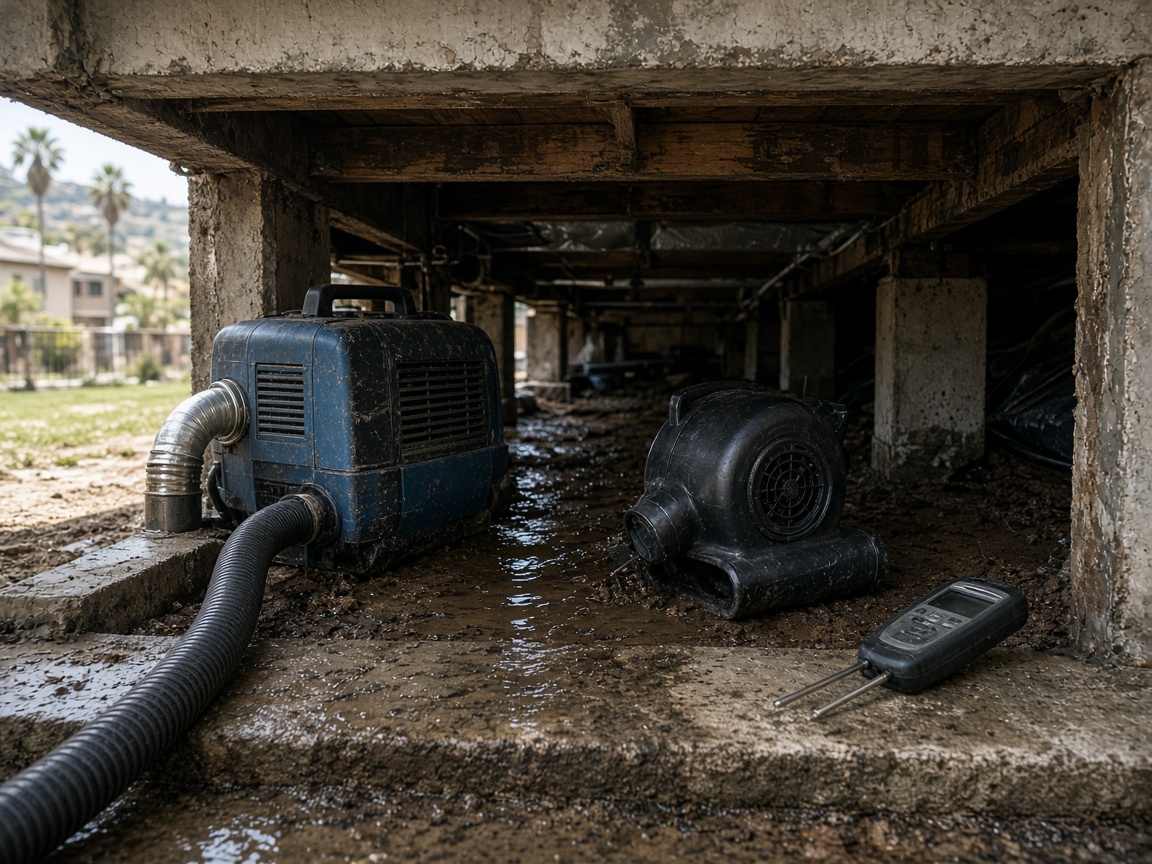
Drying a flooded crawl space in Riverside homes follows a structured sequence that begins with safety checks and water removal, then moves to targeted airflow and dehumidification, typically completing in 4–10 days when equipment runs continuously during the dry summer months common in Riverside County.
Initial Safety Assessment and Containment
Before any drying begins, technicians inspect for electrical hazards and structural weaknesses common in pre-1970 homes found in Downtown Riverside and Magnolia Center. These older crawl spaces often sit on clay-heavy soil that retains moisture longer than sandy areas near Corona. Crews install plastic sheeting barriers to isolate the space from living areas, preventing cross-contamination. They also check for sewage backup, which requires separate handling under Riverside County health guidelines. Proper containment keeps humidity from migrating into finished rooms above, especially important when summer temperatures push indoor conditions above 85 degrees. Homes near the Mission Inn or Riverside Art Museum frequently share these older foundations, making early detection of hidden rot critical before drying equipment starts.
Water Extraction from the Crawl Space
Once safety is confirmed, submersible pumps and wet vacuums remove standing water, a step that can take 4–12 hours depending on volume. In La Sierra neighborhoods, many crawl spaces slope toward the street, allowing gravity to assist removal but also channeling runoff from nearby hills during rare winter storms. Extraction connects directly to Flood Damage Restoration protocols when surface water enters from streets in Arlington. Technicians document moisture levels at multiple points using meters to establish a baseline. This phase prevents further wicking into floor joists, a frequent issue in 1950s–1960s housing stock throughout Riverside County. Skipping thorough extraction extends total drying time by days because residual water evaporates slowly under the home's limited ventilation.
Air Movement and Structural Drying Setup
After extraction, high-velocity air movers and commercial dehumidifiers are positioned to create a closed-loop drying system. Structural Drying equipment runs 24 hours daily, pulling moisture from soil, insulation, and framing. In Riverside's dry summers, relative humidity often drops below 30 percent outdoors, which helps the process but requires careful monitoring to avoid over-drying wood and causing cracks. Technicians place units every 10–15 linear feet along perimeter walls, directing airflow across the longest dimension of the crawl space. Homes in Moreno Valley and San Bernardino share similar Mediterranean patterns, so the same equipment layout works when crews travel between cities. Daily readings track progress, with target moisture content for wood set at 12–15 percent before equipment removal.
Ongoing Monitoring and Final Verification
Technicians return every 24 hours to adjust equipment placement and record moisture readings at joists, subfloor, and soil. This step catches pockets of trapped moisture that develop in low spots common under homes built on the uneven terrain near California Citrus State Historic Park. When levels stabilize for two consecutive days, the team performs a final walkthrough with infrared cameras to confirm no hidden damp areas remain. Linking this verification to the guidance in How To Spot Hidden Water Damage After Winter Rains In Riverside helps homeowners recognize early signs in future seasons. Final clearance includes removing containment barriers and restoring any disturbed insulation. The full process in Riverside typically finishes faster than in coastal regions because of the region's consistently low summer humidity.
Post-Drying Recommendations for Local Homes
After equipment removal, homeowners should improve ventilation by installing vapor barriers on the soil and adding screened vents where code allows. In areas like Magnolia Center, where many crawl spaces lack modern insulation, adding rigid foam board along rim joists reduces future condensation risk during temperature swings. Checking the linked article What Affects Water Damage Restoration Costs In Riverside California explains how soil type and home age influence long-term maintenance expenses. Regular inspections every six months catch small leaks before they flood the space again. These steps protect the structural integrity of Riverside homes built on expansive soils that shift with moisture changes.